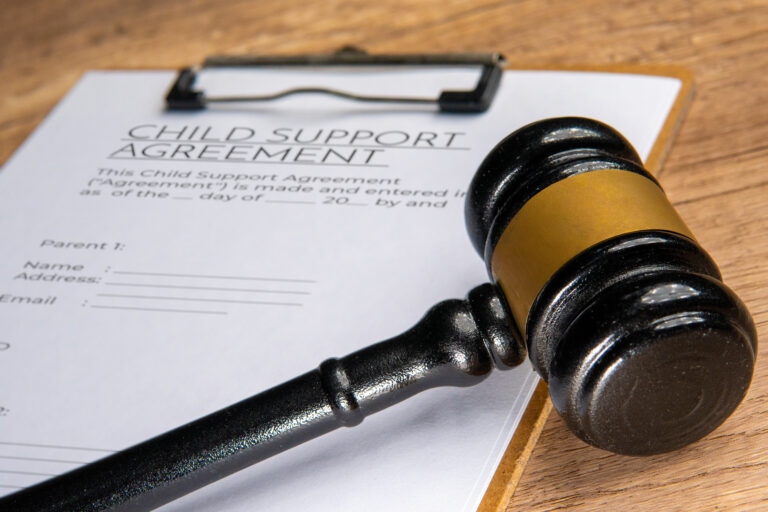
How Child Support Is Determined in Mississippi as of 2026
Figuring out Mississippi child support can feel confusing, especially when you are already dealing with a divorce, custody case, or paternity matter. Mississippi’s system straightforward compared with many other states. The court looks at the non-custodial parent’s income and applies a set percentage based on how many children need support. Here is a clear breakdown of how it all works.
Who Pays Child Support in Mississippi
The parent who does not have primary physical custody, known as the noncustodial parent, pays child support to the other parent. This payment helps cover the child’s everyday needs, including food, housing, clothing, and other basic costs.
If both parents share joint physical custody, child support may not be required. That changes if there is a big gap between the parents’ incomes and the lower earning parent cannot adequately meet the child’s needs, whether that is educational, emotional, or otherwise. In that case, the higher earning parent pays support to help close the gap.
Child support in Mississippi continues until the child turns 21 or becomes legally emancipated, whichever happens first.
The Mississippi Child Support Formula
Mississippi uses a percentage of income model. This means the court calculates the paying parent’s adjusted gross income, or AGI, which is their gross income minus taxes and other required deductions. A set percentage of that AGI becomes the monthly child support amount, and the percentage depends on how many children are involved.
For one child, the amount is 14 percent of AGI. For two children, it rises to 20 percent. Three children bring the percentage to 22 percent, four children bring it to 24 percent, and five or more children bring it to 26 percent. These figures create a starting point that judges use in most cases, known as a rebuttable presumption, meaning the court assumes this amount is fair and orders that amount, unless there is a good reason to adjust it.
Judges can deviate from these percentages under certain circumstances. This is more likely to happen when the paying parent’s annual AGI falls below $10,000 or climbs above $100,000. In those situations, the court has more flexibility to set an amount that better reflects the family’s actual financial picture.
The cost of the child’s health insurance can factor into the final support amount, though this is not always the case. Every family’s situation is a little different, so it is worth discussing this with an attorney or the Mississippi Department of Human Services, if it applies to you.
Requesting a Change to Child Support
Life circumstances change, and Mississippi’s child support system allows for that. If there is a significant shift in the paying parent’s income or in the child’s needs, either parent can ask the court for an adjustment. Common examples include job loss, a big raise, or a change in the child’s medical or educational needs.
For parents enrolled in the state’s child support program, the Mississippi Department of Human Services automatically reviews the support order every three years. This helps make sure the amount still makes sense as time passes and situations evolve.
How to Apply for Child Support
There are a few different paths to getting a Mississippi child support order.. You can request one as part of a divorce, a child custody case, or a paternity action. If none of those situations apply to you, you can also file a separate complaint and summons specifically asking the court to establish support.
If you are a single parent applying for public assistance, the state will automatically open a child support case on your behalf. This gives you access to services through the Mississippi Department of Human Services child support program, including help establishing paternity and enforcing or modifying support orders.
Parents who are not receiving public assistance can still use these services. There is a one time $25 application fee to apply for support through the department, along with a $35 annual fee to remain active in the program.
Once an application is filed, the court sets a hearing date. Both parents present evidence about income, expenses, and the child’s needs, and the judge uses that information to decide the final support amount.
If both parents already agree on a support amount, there is a simpler route. You can put the agreement in writing through a stipulated agreement or include it as part of a parenting plan. Have the document notarized and file it with your local Chancery Court. Once the court approves it, the agreement becomes just as enforceable as a standard court order.
What Happens if Child Support Is Not Paid
Mississippi takes missed child support payments seriously, and there are real consequences for falling behind. A parent who does not pay support risks having their driver’s license suspended and their tax refund seized to cover the debt.
If you are enrolled in the Mississippi Department of Human Services child support program, the department can take enforcement action automatically when needed. If you are not enrolled in the program, you will need to start a court action against the paying parent yourself to enforce the order.
It helps to understand that child support and child custody are treated as two completely separate issues under Mississippi law. A paying parent cannot legally stop making support payments just because they are being denied visitation, and a custodial parent cannot legally deny visitation just because support payments have stopped. Each issue has to be addressed on its own through the court system.
Getting Support Right From the Start
Understanding how Mississippi calculates and enforces child support can make the entire process feel a lot less overwhelming. Whether you are just starting a custody case, applying for support services, or trying to modify an existing order, knowing the formula and your rights puts you in a much stronger position. If your situation is complicated or you are unsure how the guidelines apply to you, talking with a family law attorney or reaching out to the Mississippi Department of Human Services can help you get clear, personalized answers.
If you need any clarification, call the Hancock Law Firm at (601) 853-2223.